
Crossword puzzles are everywhere – in newspapers, online, and in puzzle books. Many people love solving them. But have you ever wondered how these puzzles are made? Who thinks up the clues and fits all those words together? The people who create crosswords are often called “setters” or “constructors.” Learning about how crossword setters design puzzles shows it’s a job that needs both logic and creativity. It’s like being a word architect and a clever artist at the same time.
Table of Contents
The Art and Science of Crossword Creation
Making a crossword isn’t just about knowing lots of words. It’s a careful process with many steps. A good puzzle is fun, challenging but not impossible, and feels satisfying to finish. Setters need to think like the people who will solve the puzzle.
More Than Just Words: What Makes a Good Puzzle?
A great crossword puzzle is fair, meaning the clues provide enough information to figure out the answer, even if it requires some thought. It should also be engaging, with interesting and perhaps playful words and clues. A well-built puzzle features words fitting together neatly in the grid, following specific rules. Additionally, it should have a good flow, where solving one clue assists in solving others nearby. Understanding how crossword setters design puzzles involves appreciating these qualities that go beyond just knowing words.
Step 1: Planning and Preparation – Laying the Foundation
Before placing a single word in the grid, a setter does a lot of planning.
Defining Purpose and Audience
First, the setter thinks: Why am I making this puzzle? Is it just for fun for a newspaper? Is it for learning, maybe in a classroom? Who will be solving it? A puzzle for beginners will be much easier than one for experts. The audience affects the difficulty level and the types of words and topics used.
Choosing the Right Puzzle Type and Size
There isn’t just one type of crossword.
- Quick Crosswords: These usually have simple definition clues.
- Cryptic Crosswords: These have tricky clues that are like mini-puzzles themselves. Mixing quick and cryptic clues in one puzzle is usually avoided.
- Themed Crosswords: Many puzzles have a theme, where some answers relate to a specific topic.
- Other Types: There are also diagramless puzzles (no grid shown!), circular puzzles, and more.
The size of the grid matters too. A common size for daily puzzles is 15 squares across and 15 down (15×15). Sunday puzzles are often bigger, like 21×21. Sometimes, special puzzles use custom sizes.
Understanding the Rules and Gathering Tools
Crossword puzzle setters follow rules such as minimum word length and, in American-style puzzles, often employ 180-degree rotational symmetry and ensure each letter participates in both Across and Down words. Publishers may have additional requirements regarding themes and vocabulary. Setters utilize dictionaries, thesauruses, word lists, and specialized software to aid in grid construction and word finding, making the initial planning stage crucial and time-intensive.
Step 2: Building the Grid – The Skeleton of the Puzzle
Once the plan is ready, the setter starts building the grid.
Symmetry and Structure: The Importance of Layout
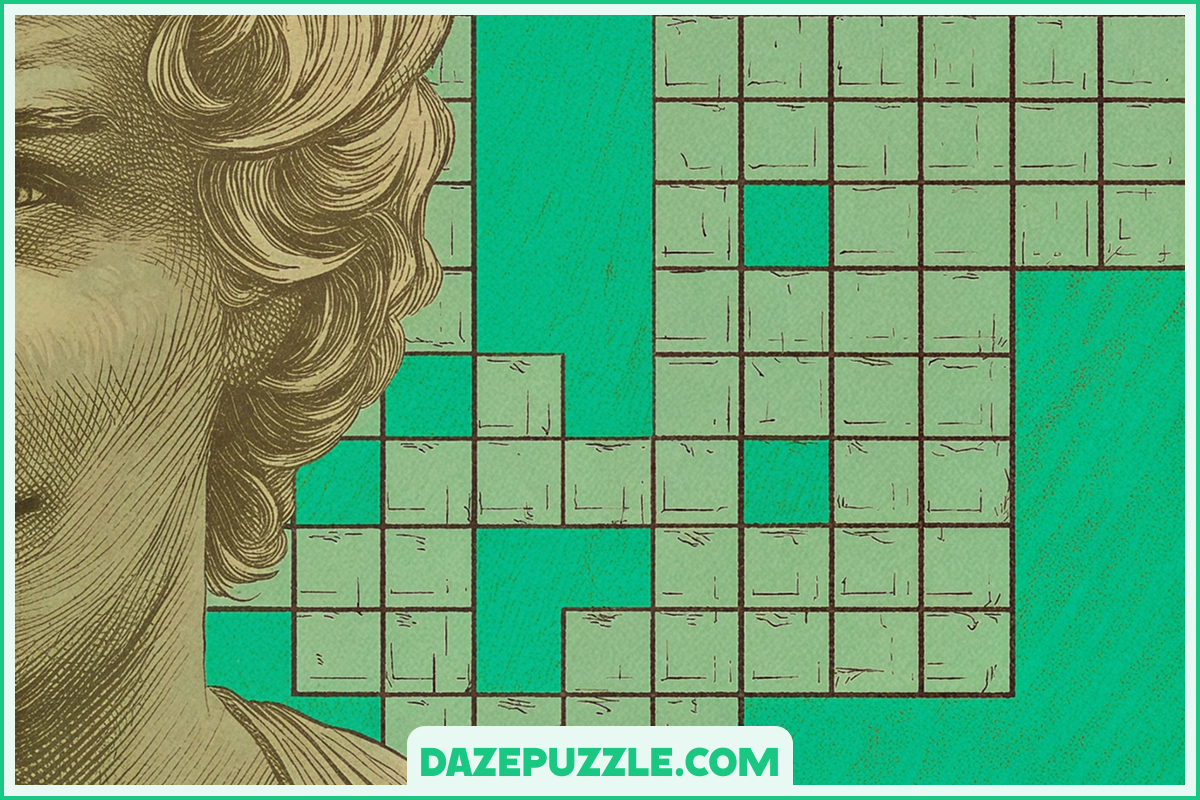
As mentioned, many American-style puzzles have rotational symmetry. This means the pattern of black squares looks the same when the grid is rotated 180 degrees. This symmetry is mostly for appearance, but it’s a strong tradition. Another key rule, especially in American puzzles, is that all the white squares must be connected. You shouldn’t have parts of the grid cut off from the rest.
Placing Black Squares Strategically
The black squares aren’t just decoration. They separate the words. Setters place them carefully to:
- Control the length of the words.
- Make sure the white squares stay connected.
- Create a visually appealing pattern.
- Limit the number of black squares (often around 15-16% in American puzzles).
Using Technology vs. Traditional Methods
Some setters still like using graph paper and pencil to design grids. However, most professionals now use computer software. Programs like Crossword Compiler or Crossfire help design the grid, check symmetry, and even suggest words. Software makes some parts faster, but the setter’s skill is still essential.
Step 3: Filling the Grid – Choosing the Right Words
With the grid structure in place, it’s time to fill it with words. This is often like solving a puzzle itself!
Finding Lively Vocabulary (and Avoiding “Crosswordese”)
Setters aim for interesting and “lively” words when possible. They try to avoid too many obscure words that people rarely use outside of crosswords. These odd words are sometimes called “crosswordese”. Examples might include words like ERE (an old word for “before”) or ERNE (a type of eagle). While these short words with common letters can be helpful for filling tricky spots, using too many can make the puzzle feel stale or unfair. A good puzzle mixes common words with some less common but still knowable ones.
The Role of Word Lists and Software
How do setters find the right words?
- Word Lists: Many keep personal lists of interesting words or words related to specific themes.
- Databases: Software often includes huge word databases, sometimes sorted by length or topic.
- Software Assistance: Programs can suggest words that fit a specific pattern of letters already in the grid. Features like “AutoFill” can fill parts of the grid automatically, but setters use this carefully to keep the puzzle interesting. Many prefer to fill the grid manually for more control.
Starting with Theme Words and Longer Entries
A common strategy is to place the longest words first, especially if they are part of the puzzle’s theme. Once these main “anchor” words are in, the setter works on filling the smaller words around them. They pay attention to letter combinations. Using words with common letters (like E, A, R, S, T) makes it easier to connect words. Trying to fit in too many rare letters (like Z, Q, X, J) can make filling the grid very difficult. Filling the grid is often a process of trial and error, sometimes requiring changes to the grid or word choices.
Step 4: Writing the Clues – Where the Magic Happens
Many setters say writing the clues is the most creative and fun part.
The Goal: Clear, Fair, and Engaging Clues
Good clues are essential for a good puzzle. A setter aims for clues that are:
- Accurate: The clue must correctly lead to the answer.
- Clear and Concise: Easy to understand, without unnecessary words.
- Fair: Solvable with the information given, not needing a wild guess.
- Engaging: Interesting, sometimes witty or playful.
- Grammatically Consistent: The clue and answer should match in tense, number (singular/plural), and part of speech.
Setters use dictionaries, thesauruses, and other resources to find different ways to hint at the answer. They usually avoid using the answer word itself within the clue (unless it’s a very common word like “a” or “the”).
Different Clue Types: Quick vs. Cryptic
- Quick/Straight Clues: These are usually simple definitions or synonyms. Example: “Large dog breed (6)” for LABRADOR. American-style puzzles mostly use these.
- Cryptic Clues: These are more complex and contain wordplay plus a definition. They are common in UK crosswords. Example: “Reportedly observe ocean creature (3)” for SEE (sounds like SEA, and SEE means observe).
Tailoring Difficulty to the Audience
Clues are carefully written to match the puzzle’s intended difficulty. For example, in The New York Times, the Monday puzzle has the easiest clues, and they get progressively harder through the week, with Saturday being the toughest.
The Art of Cryptic Clue Construction (Brief Overview)
Cryptic clues are a special skill. Each clue usually has two parts: a definition and wordplay that both lead to the same answer. Common types of wordplay include:
- Anagrams: Letters of a word in the clue are mixed up (e.g., “Crazy uncle (5)” for LANCE – anagram of ‘clean’). Indicator words like ‘crazy’, ‘mixed’, ‘about’ often signal an anagram.
- Hidden Words: The answer is hidden inside the clue (e.g., “Part of debacle ended badly (3)” for BED – hidden in ‘debacle ended’).
- Containers: One word goes inside another (e.g., “Place ad in newspaper (6)” for RAGTAG – TAG (ad) inside RAG (newspaper)). Indicators like ‘in’, ‘around’, ‘holding’.
- Reversals: A word is spelled backward (e.g., “Stop evil creature returning (4)” for LIVE – EVIL reversed). Indicators like ‘returning’, ‘back’, ‘up’.
- Double Definitions: Two straight definitions (e.g., “Kind of duck that goes down (4)” for DOWN).
- Homophones: Words that sound alike (e.g., “Listened to the whole amount (4)” for SUM – sounds like SOME). Indicators like ‘reportedly’, ‘we hear’, ‘sounds like’.
Cryptic setters try to make the whole clue read smoothly like a normal phrase (this is called the “surface reading”), even though it hides the wordplay.
You can also read our other article here: Solve Cryptic Crosswords: 10 Clue Types and How To Crack
The Power of Themes in Crosswords
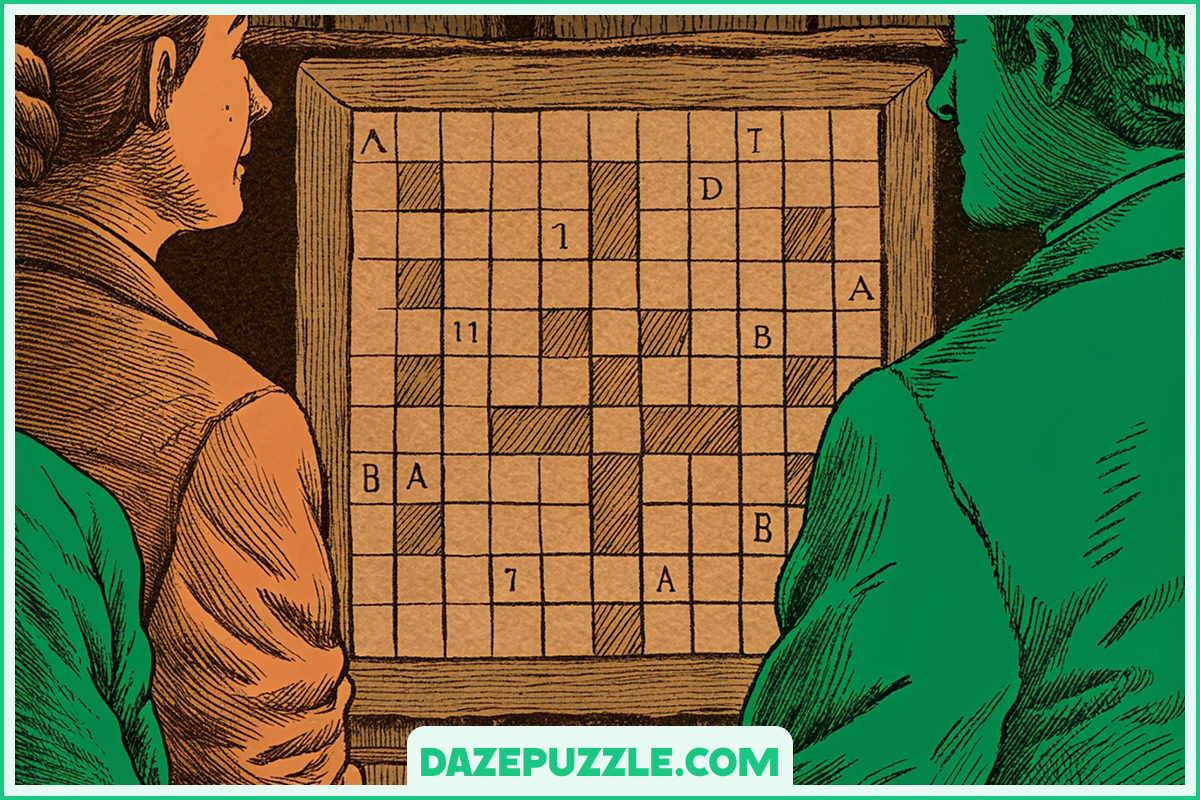
Many crosswords, especially American-style ones, have a theme. A theme connects several longer answers in the puzzle, adding an extra layer of fun and challenge.
Why Themes Matter
Themes make puzzles more interesting than just a random collection of words. Discovering the theme can give the solver a satisfying “aha!” moment. Coming up with fresh and clever themes is a big part of how crossword setters design puzzles.
Common Theme Types Explained (Category, Rebus, etc.)
Setters use many kinds of themes:
- Category Themes: All theme answers belong to the same group (e.g., types of trees, names of rivers, movies by a certain director).
- Quote Themes: A famous quote is broken up across several answers.
- Rebus Themes: Some squares contain multiple letters or even small pictures instead of just one letter.
- Addition/Subtraction Themes: Letters or words are added to or removed from common phrases (e.g., adding “CAR” to phrases: PET CARRIER, CAR WASH).
- Pun Themes: Theme answers involve puns.
- Hidden Word Themes: A specific word is hidden within each theme answer.
Integrating Themes and Revealers
Theme answers are usually the longest ones in the grid. Often, there’s a special clue called a “revealer”. This clue and its answer directly hint at or explain the theme. It’s often placed near the bottom of the grid, so solvers might figure it out after getting some of the other theme answers. Not all puzzles have themes; Friday and Saturday puzzles in some papers are often themeless, focusing instead on tricky words and clever clues.
Different Styles, Different Challenges: American vs. Cryptic and More
Crosswords aren’t the same everywhere. The two main styles are American and Cryptic.
American Style: Dense Grids, Straightforward Clues
- Grid: Usually square (like 15×15 or 21×21), densely filled with words. Almost every letter is part of both an Across and a Down answer (it’s “checked”). Symmetrical black square patterns are standard.
- Clues: Mostly direct definitions or fill-in-the-blanks. Wordplay is less common than in cryptics. Answer length isn’t usually given in the clue.
- Solving: Requires good vocabulary and general knowledge.
Cryptic Style: Wordplay and Definitions
- Grid: Often has more black squares than American style, meaning fewer letters are checked. Grid patterns can vary, sometimes using thick lines (“bars”) instead of black squares. Symmetry is common but not always required.
- Clues: Each clue is a mini-puzzle with a definition part and a wordplay part. The answer length is usually given in parentheses, like (5).
- Solving: Requires understanding the specific rules and conventions of cryptic wordplay.
A Look at Other Variations
There are many other types:
- Barred Crosswords: Use bold lines instead of black squares. Often used for harder cryptics.
- Diagramless Crosswords: Solver must figure out where the black squares go as well as the answers.
- Fill-In Crosswords: A list of words is given, and the solver has to fit them into the grid.
- Cipher Crosswords (Codebreakers): Each letter is replaced by a number. Solver must crack the code.
- Arrowords: Clues are written inside the grid itself, in squares that would normally be black.
Different languages also have their own styles, like Japanese crosswords using syllables or Swedish crosswords with clues in the black squares.
Behind the Scenes: Editors and Professional Techniques
Making puzzles isn’t just the setter’s job. Editors play a big role too.
The Editor’s Role: Refining and Ensuring Quality
Beyond setters, crossword editors are vital in selecting and refining puzzles for publication. They review submissions for theme consistency, word quality, and clue accuracy, ensuring adherence to publication standards and difficulty. Editors provide feedback, suggest revisions, and increasingly promote diversity and inclusivity in puzzle content through a collaborative relationship with setters.
Pro Tips: Software, Word Lists, and Strategies
Experienced setters develop their own techniques.
- Software Power: Most pros use specialized software like Crossword Compiler or Crossfire for grid design, filling assistance, and formatting. These programs have features to score words (preferring lively ones over obscure ones) and manage word lists.
- Personal Word Lists: Many build their own databases of good words and clever clue ideas over time.
- Strategic Filling: They often place theme words first, then tackle parts of the grid with limited options.
- Clue Craft: They explore multiple meanings of words using thesauruses and aim for variety in clue subjects within one puzzle.
- Being a Solver: Most agree that being a keen solver yourself is crucial for understanding what makes a good puzzle.
A Brief History of Crossword Puzzles
Crosswords are relatively new.
- The Beginning: The first “word-cross” puzzle was created by Arthur Wynne, a journalist, for the New York World newspaper in 1913.
- The Craze: Puzzles became hugely popular in the 1920s. The first crossword puzzle book was published in 1924.
- Newspaper Acceptance: Major papers like The New York Times were initially hesitant but eventually started publishing crosswords in the 1940s. Margaret Farrar was the NYT’s first influential editor.
- Evolution: Grids became standardized (square, symmetrical), and clue styles evolved from simple definitions to include more wordplay and themes. Cryptic crosswords developed as a distinct style.
- Technology: Computers and the internet changed how crossword setters design puzzles and how people solve them, with software aiding creation and online platforms making puzzles widely accessible.
Thinking of Trying It Yourself? Tips for Aspiring Setters
If understanding how crossword setters design puzzles makes you want to try making one, here are some tips:
- Solve, Solve, Solve: Become an avid solver first. This teaches you conventions and what works.
- Start with a Theme: Think of a theme to guide your word choices. Make a list of theme-related words.
- Build the Grid: Use graph paper or software. Start by placing your longest theme words, often near the center, and build outwards. Aim for words of four letters or more, mostly. Use common letters.
- Write the Clues: Once the grid is full, write clues for each word. Use a thesaurus for ideas. Decide if you’re writing simple or cryptic clues (don’t mix them).
- Use Resources: Explore crossword software (some free versions exist), online word lists, and online communities for setters for help and feedback.
- Test Your Puzzle: Have someone else solve it to find confusing clues or mistakes.
- Be Patient: Learning takes time and practice. Start with smaller puzzles (like 11×11) before tackling a standard 15×15.
The Enduring Appeal of the Crossword
How crossword setters design puzzles is a fascinating blend of language skill, logical thinking, general knowledge, and pure creativity. From the initial spark of a theme idea, through the careful construction of the grid and the clever crafting of clues, to the final polish by an editor, creating a crossword is a detailed and rewarding process. Whether it’s a quick daily puzzle or a complex cryptic challenge, the goal is always to entertain and engage the solver, offering that satisfying click when a tricky clue finally makes sense. The enduring popularity of crosswords shows our love for words, challenges, and the simple joy of filling in those blank squares.